Featured


The Basic Principles Of Staying Safe from Bankruptcy Counseling Predatory Practices
Table of Contents
That releases up cash in the short term, and you might have 3 to 4 years to save towards the negotiation quantity. Very hazardous to credit history, mainly because of missed out on payments and an adverse "cleared up" mark that could remain on your debt report for as much as seven yearsMay be only option if various other options (debt combination, balance transfer credit history cards, financial obligation mercy) aren't possibleTypically calls for a fee to the 3rd party, which might counter some or every one of the savings from debt settlementMay help you prevent bankruptcy if you've missed out on several paymentsNot all financial institutions work with financial obligation negotiation companies Debt mercy may be ideal for you if you are experiencing an economic hardship that makes it virtually impossible to pay for your financial obligation balances.
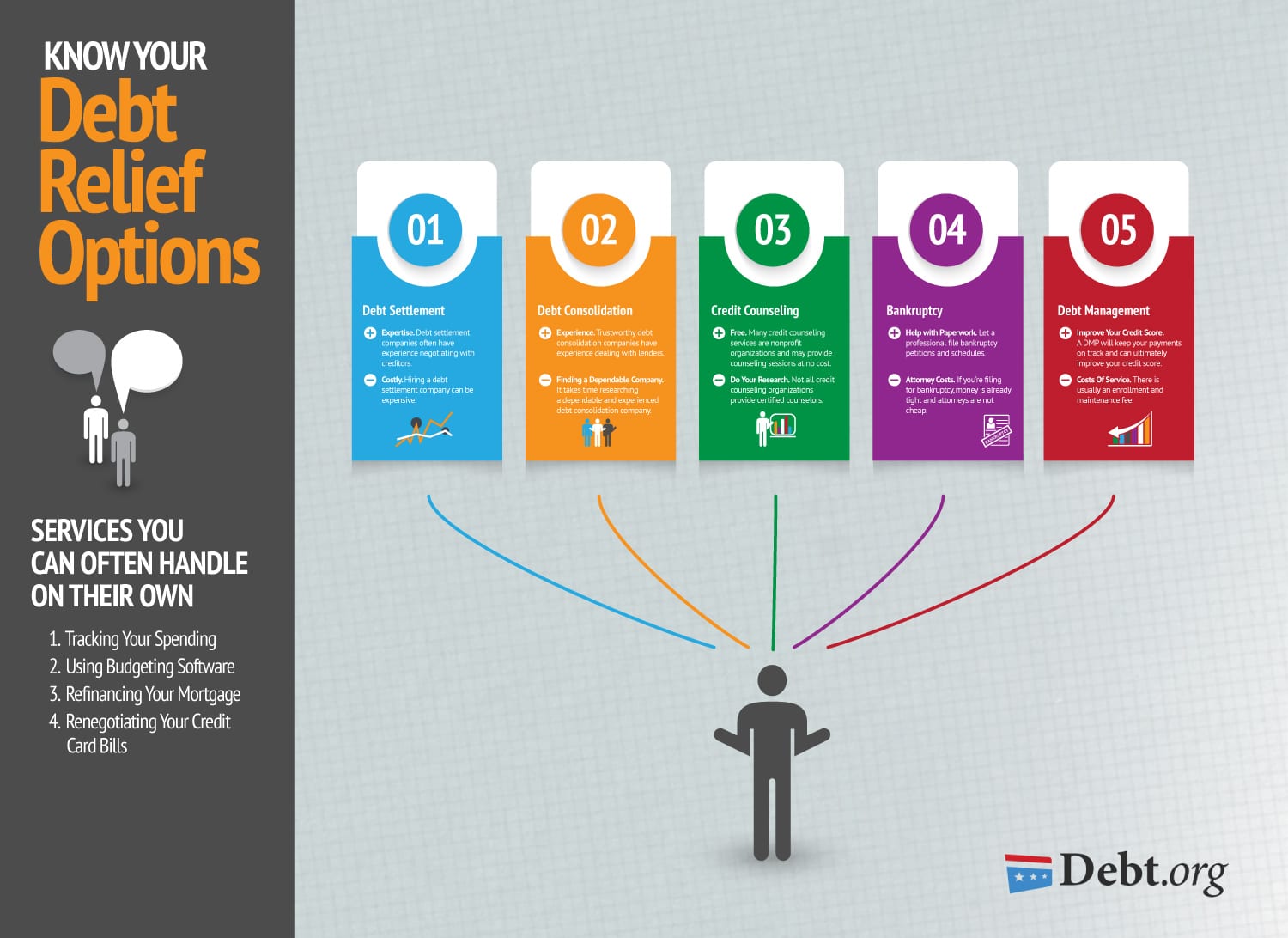
With a DMP, you make one month-to-month payment to the credit history counseling firm. Those funds are after that dispersed to lenders of your unsafe debts, such as credit report cards and installment fundings. The company collaborates with your financial institutions to lower interest rates or waive charges, yet some creditors might decline such concessions.
A financial debt loan consolidation loan combines your qualified financial obligations right into one new financing. It can aid you pay down financial obligation if you have the ability to protect a funding price that's lower than the average price of the accounts you're consolidating. However, you have to avoid acquiring financial obligation on those freshly cleared accounts or your financial debt can grow even greater.
That gives you plenty of time to remove or significantly lower your equilibrium while making interest-free settlements.
The Facts About How Bankruptcy Counseling : APFSC’s Guidance for Financial Relief Providers Help Clients to Secure Debt Freedom Revealed
You might require it if your lender or a collection agency ever attempts to accumulate on the financial obligation in the future. When a lender forgives $600 or even more, they are called for to send you Form 1099-C.
Debt mercy or settlement almost constantly injures your credit history. Anytime you resolve a debt for much less than you owe, it may show up as "worked out" on your credit score record and impact your credit report for seven years from the day of settlement. Your credit report can likewise go down significantly in the months causing the mercy if you fall behind on settlements.
Market Factors and Increased Need for Bankruptcy Counseling : APFSC’s Guidance for Financial Relief Things To Know Before You Get This
This scenario usually results from underreporting earnings, not filing returns on time, or inconsistencies discovered throughout an IRS audit. The repercussions of gathering tax obligation debt are severe and can consist of tax liens, which give the IRS a legal insurance claim to your residential property as safety and security for the financial debt.
Higher rate of interest on readily available credit scores. Salaries and Financial institution Accounts internal revenue service can levy (seize) earnings and checking account to please the debt. Lowered income and disruption of essential monetary procedures. Building Seizure In extreme instances, the internal revenue service can take and sell property to cover the financial debt. Loss of important assets and prospective displacement.
Clinical depression, anxiousness, and various other psychological health and wellness issues. Social Stigma Dealing with lawsuit from the internal revenue service can carry social stigma. Damage to credibility and relationships. Employment Opportunities An inadequate credit rating as a result of exhaust debt can restrict job opportunity. Trouble finding or keeping a job. Federal government Benefits Tax debt might affect eligibility for government advantages, such as Social Security and Medicaid.
How Actual Experiences of Bankruptcy Counseling Recipients can Save You Time, Stress, and Money.
The OIC thinks about numerous aspects, including the taxpayer's revenue, expenditures, property equity, and capability to pay. Successfully bargaining an OIC can be intricate, requiring a complete understanding of the IRS's guidelines and a solid disagreement for why your offer aligns with your capacity to pay. It is necessary to keep in mind that not all applications are accepted, and the process needs in-depth monetary disclosure.
The IRS evaluates your general economic scenario, including your revenue, expenses, possession equity, and capacity to pay. You have to also be present with all declaring and settlement requirements and not remain in an open personal bankruptcy proceeding. The IRS additionally considers your conformity history, evaluating whether you have a document of timely filing and paying tax obligations in previous years.
All about Understanding Expert Bankruptcy Counseling : APFSC’s Guidance for Financial Relief
The application process for a Deal in Compromise includes numerous comprehensive steps. You have to finish and send Internal revenue service Form 656, the Offer in Compromise application, and Kind 433-A (OIC), a collection details declaration for individuals. These kinds need comprehensive monetary info, consisting of details about your income, financial debts, costs, and properties.
Back taxes, which are unsettled tax obligations from previous years, can substantially boost your total IRS financial debt otherwise attended to without delay. This debt can accrue passion and late settlement fines, making the initial quantity owed a lot larger over time. Failure to repay tax obligations can lead to the IRS taking enforcement activities, such as issuing a tax lien or levy versus your building.
It is essential to deal with back tax obligations as quickly as feasible, either by paying the sum total owed or by setting up a repayment strategy with the IRS. By taking proactive steps, you can prevent the buildup of extra passion and charges, and protect against extra hostile collection activities by the internal revenue service.
One typical reason is the belief that the taxpayer can pay the total either as a round figure or with a payment strategy. The IRS also thinks about the taxpayer's income, expenditures, possession equity, and future earning capacity. If these variables indicate that the taxpayer can pay for to pay more than the used quantity, the IRS is most likely to turn down the deal.
The Basic Principles Of Measures to Take to Restore Your Finances
Dealing with IRS financial debt can be complex and difficult. Tax obligation experts, such as CPAs, tax attorneys, or registered representatives, can provide invaluable aid.

Table of Contents
Latest Posts

7 Easy Facts About Rebuilding Your Financial Standing the Strategic Way Shown

An Unbiased View of Credentials Standards from Alternative How Strategic Goal Setting Can Transform Your Debt Elimination Journey : APFSC Organizations
The smart Trick of Documents You'll Need When Pursuing Importance of Financial Literacy for Better Management : APFSC That Nobody is Discussing
More
Latest Posts
7 Easy Facts About Rebuilding Your Financial Standing the Strategic Way Shown